Tuesday, 13 December 2022

Project Mobility: Greece, 3rd-7th December 2022

 In the week behind us a project mobility to Greece was held. We visited the city of Drama in Greece. Built on countless springs, as the etymology of its name clearly indicates, Hydrama – Drama, due to the abundance of water. Thus, we had the opportunity to participate in the celebration of the holiday of St. Barbara and release our Common Heritage boat of wishes at the source of the already mentioned waters in the city park Agia Varvara Park named after the church of St. Barbara, which is located nearby. Inevitably, we tasted delicious desserts that the hosts prepare to celebrate St. Barbara. We visited, among other things, Philippi, an archaeological site inscribed on the UNESCO list of material heritage, the Baptistery of St. Lydia and the city of Kavala located by the sea. The hosts also prepared a number of workshops, from designing the boat of wishes, writing a petition to the Goddess Fortune, to making Christmas decorations and engaging mobility participants in musical improvisations at the Rebetiko music workshop at the Music School of Drama. The achievements of the latter are truly impressive, because Drama, a city the size of Kaštela, also has a symphony orchestra, and about 120 music teachers working in the school itself. The natural heritage of Greece, the cave Alistrati and Aggitis, is a story in itself. The crystalline stalagmites and stalactites of incredible colors and shapes, and the river that flows through the Aggitis cave left us breathless. We also visited the house of marble that is extracted from the nearby mountains, and we paid special attention to the Mediterranean diet registered on the UNESCO list of intangible heritage through lectures and workshops.

Our students presented Croatia through a presentation on food, focusing this time more on the north of the country and the tradition of Hrvatsko Zagorje, talking about the tradition of making Liticari Hearts, which we had previously made and given to our peers in Greece.

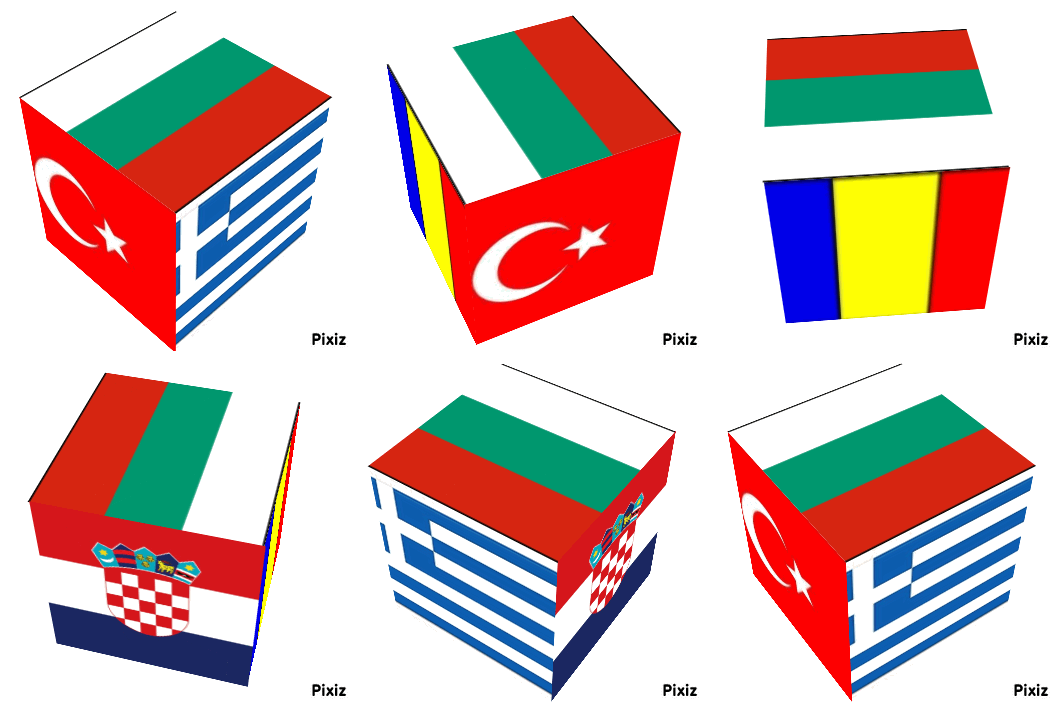
Needless to say, fan club of the Croatian national football team received reinforcements from the countries participating in the project: Bulgaria, Romania, Turkey and hosting Greece. Music accompanied us all the way, both traditional Greek and fan songs sung by our students from the back of the bus, joined by the participants from other countries, amplifying the vocals. We all celebrated the victory over Japan.

It was an intense week in which we had the opportunity to experience the cultural heritage of Greece, which until then we only had the opportunity to hear about, and now we were convinced of the wealth of material and immaterial aspects of Greek culture. The hosts proved to be extremely accommodating and hospitable, for which we thank them on this occasion again.

https://animoto.com/play/XNkFFPk0wgsZZOwrhJuk0w


Tuesday, 15 November 2022

Greek Mythology in a Nutshell

Looking forward to the forthcoming mobility our 8 graders came up with a presentation on Greek Mythology, a well of wisdom and inspiration for so many artworks. Ivana and Antea's work was also presented to the 7 graders as well. We also worked collaboratively on the Myth of Daedalus and Icarus. Of course we played a Kahoot, aided by the presentations. Take the challenge.


KAHOOT QUIZ
https://create.kahoot.it/share/greek-mythology/cf972e9a-15d9-4e4d-9d37-c269db3c2771


Saturday, 12 November 2022

Croatian Traditional Food

We are currently getting ready for the Greek mobility with great joy. In the meantime, we have refreshed our knowledge on the traditional cuisine. Antea, a 7 grader, has presented her work to the class and further to the presentation we have played a Kahoot. There we have noticed some weaknesses in our knowledge, but also reinforced some messages, like the fact that the Mediterranean Diet is inscribed on the UNESCO List of Intangible Heritage. Besides the traditional food, we have also enjoyed listening to the traditional music accompanying the video material on the Mediterranean Diet. Two other classes, 6d and 7c, have also participated in these activities. Here we share the materials.


Saturday, 22 October 2022

Days of Bread and Gratitude for the Fruits of Autumn

 With the first days of autumn, the fields, vineyards and orchards present us with various and delicious fruits. The wealth of colors, smells and tastes spreads in all directions. That's why every year at the beginning of October we celebrate the Days of Bread and Thanksgiving for the Fruits of the Earth.

In our school students learn about the creation of bread and its importance in nutrition, about tradition and Croatian customs. Through instructive stories, recitations, plays and educational films, children are taught about bread. Through practical activities and creative workshops, students are introduced to the making of bread, pastries, and cakes. The participation of the students themselves in making bread is encouraged, both in schools and in families. Emphasis is placed on a healthy diet and the consumption of fruits and vegetables.

The 2nd grade students were also happy to bring their favorite autumn fruits to school, which they displayed in the school's atrium. They learned songs about bread and how bread is made. They kneaded buns in their homes and proudly brought them to show their friends in class. They saw how much effort needs to be put into each piece of pastry!
The most joyful moments were the exchange of fruit and pastries and their consumption. With gratitude for the blessings given, we eagerly await next autumn!


Mirjana Drazin


Sunday, 16 October 2022

GREECE - Erasmus days 2022

As part of the erasmus days, our students answered electronic quizzes regarding the erasmus program. They wrote messages about Erasmus. Our messages were promoted to other schools of Drama.


CROATIA - Erasmus Days 2022

Erasmus Days is an event that takes place from 13 to 15 October 2022 and celebrates Erasmus Plus Program as a whole, highlighting the success of the program and showcasing the benefits of learning experiences through international cooperation.

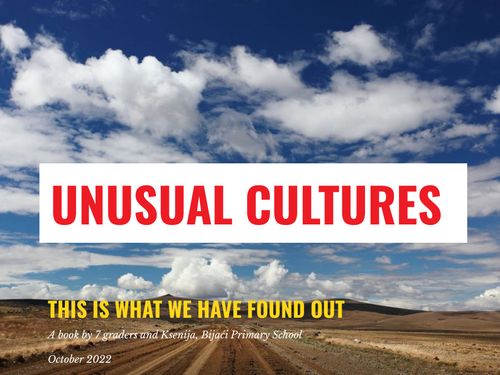
Following our Erasmus+ project Common Heritage from Tradition to Future, which promotes intangible cultural heritage, 5c students got an insight into a presentation on cultural heritage and tested their knowledge through a Kahoot on the same topic. This class joined the project with great enthusiasm, and made wonderful kites that now decorate the foreign language classroom. The idea came from our e-book entitled Unusual Cultures, which explores some intangible features of the cultural heritage of the partner countries. That's how we found out why the Greeks fly kites at Easter, so we made them through true collaborative work. Namely, one class would start the work, and the next class would finish it, which is the case with 6d and 7c. class. The e-book lists more traditions such as Martenitsa among the Bulgarians and Boboteaza among the Romanians. And 7.c. went hunting for an unusual item hidden in the school yard and found Nazar, a Turkish amulet.

In addition to the events at the school, on the evening of October 13, students participated in a Zoom meeting organized by a Bulgarian school wishing to share their impressions of the mobility that took place in our country earlier this year. The impressions seem to be very much alive and it was very nice to hear Bulgarian peers inviting the mobility host students to a return visit. We would like to thank all the participants in Croatian mobility once again for their collaborative work and friendship.


Saturday, 1 October 2022

European Day of Languages

On the 26th September we celebrated the European Day Languages by watching some wonderful scenes of cultural heritage of partner countries. Now we can say for sure: MI VOLIMO KULTURNO NASLJEĐE.


Sunday, 19 June 2022

Follow up on the mobility

The project mobility that took place last month stirred a lot of interest among Croatian students. Their contribution to the project activities was invaluable.

Thus class 6c, prompted by playing Kahoots about project partner countries, came up with posters detailing main national symbols of Bulgaria, Greece, Romania, Turkey and Croatia. For that purpose they collected visual materials posted on the Erasmus+ bulletin board prior to the mobility, did their research on the aspects such as flag, coat of arms, national heros,  cultural heritage elements etc., and started developing posters about the project partner countries. In the process we came across very interesting facts such as Rudyard Kipling's translation of the Greek anthem or a beautiful translation of the Croatian anthem lyrics by the Croatian diaspora in the USA. Once the posters were done, the students presented them to the class and ended the lesson with listening to the “Mystery of Bulgarian voices”. And our score on Kahoot was much better once we replayed😊. Please watch the following video depicting the process:


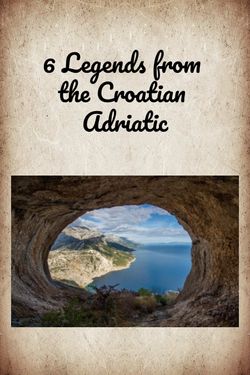
The same class got intrigued by the Croatian Myths and Legends, following an e-book prepared by the teacher.

Two students made posters and illustrations of 6 legends from the Adriatic and presented them in impeccable English to the class in the school atrium. Please see the video:

https://animoto.com/play/AjBOq55yXyROHP041wv0yg

And finally, two students from 5c who participated in the visit to the Falconry Center in Dubrava during the mobility were so impressed by the event and stirred interest among their classmates by sharing videos they had made on the spot. We ended up with several posters and a teacher-s presentation, thus integrating biology and intangible cultural heritage in our regular English lesson.


It was a nice project year. We are looking forward to the project continuation. See you in September!

Saturday, 28 May 2022

Mobility in Croatia 8th-14th May 2022

Croatian students have prepared several presentations on Croatian cutural heritage, parts of which have been shown to the audience during the opening session of the mobility. The rest will be shown during regular classes of English, as part of our adapted curriculum inclusive of the Erasmus+ project Common Heritage from Tradition to Future. For the purposes of copyright issues, some video parts of the presentations unfortunately had to be muted.  


Thursday, 19 May 2022

Mobility in Croatia

We were happy to host a mobility in Croatia from 8th to 14th May 2022. We hope that our guests have had an interesting week in our country. We tried our best to show them a part of our cultural heritage. We thank them all for being with us.


Wednesday, 18 May 2022

GREECE - Second meeting in Croatia


Presentations, Videos, Traditional song and dance


Presentation of Greece in CROATIA
We presented the most important cities of Greece arriving in our city Drama.


Our greek song

Handmade gifts that we made to give to our friends Ivano, Petra and Nina who hosted us in Croatia! We thank them very much for their warm hospitality! 💗


Our project was widely covered in the press.

http://nevsehirtrend.com/erasmus-projesi-kapsaminda-hirvatistan-ziyareti-gerceklestirildi/


Teachers and students became aware of the new dimensions of culture and heritage and the need to preserve cultural heritage through intercultural dialogue with their peers from different countries.


The main goal is to promote and benefit from the common cultural heritage registered with UNESCO, as well as to attract new generations to culture.


In addition to numerous workshops organized by Bijaći School, Kaštela City Museum, Split Archaeological Museum and Klis Tourism Board, Trogir, Salon, Split, Krka National Park, Falconry Center in Dubrava, Šibenik and finally Klis Castle were visited. The visit also served to recognize the cultural heritage of the partner countries through dance, songs, folk dress and cultural presentations.


Croatia mobility was carried out on 8-14 May. We visited Croatia as part of the Erasmus+ project called “Common Heritage from Tradition to the Future”

Sunday, 24 April 2022

Chakavian dialect and children

A group of 6 graders (Paulina, Iva, Mirela, Karmen, Ana nad Nina) make up a drama group aiming to preserve Ča from forgetfulness. With the help of an 8 grader Roko who made below video under the title of "And time goes by..." based on the script written by Nataša Jukić, our Education Assistant.


Please take a look at how children see misunderstangings stemming from the generations gap but also the most important values that always connect us...
Author: Nataša Jukić


Friday, 22 April 2022

Home

At the top of the blog you will find country links that lead to each country's produced digital products. Don't forget to click on the older posts link at the end of each page to see our older posts. Additionally, you will find links to our common digital products, dissemination, on-line meetings and surveys. 


 The project, Common Heritage from Tradition to Future, was created in collaboration with Bulgaria, Romania, Turkey, Croatia and Greece and will last 24 months. The intangible cultural heritage is very fragile and if it is not passed down from generation to generation it will disappear. Cultural heritage unites communities and empowers people to imagine a common future. It connects the present, the past and the future. In this case, educational institutions must give more place to cultural heritage issues, attract new generations, strengthen curricula to pass on intangible heritage to future generations. 

Our goal is to educate students who have a common heritage, to show tolerance for different cultures, to understand the importance of their intangible cultural heritage and to integrate it locally, nationally and internationally by increasing sensitivity and combining elements of entrepreneurship with cultural elements. for sustainable development. 
Our goals through this program are: 
1) To develop new material that is addressed to the new generations and to adapt the curriculum so as to ensure the sustainability of the intangible cultural heritage. 
2) To transform the elements of cultural heritage into digital content for the education of the younger generations, in order to facilitate the transfer of cultural elements to the new and future generations. 
3) To keep alive the cultural heritage by designing tourism products and to encourage students in entrepreneurship for sustainable development. 
4) To present our intangible cultural heritage at local, national and international level to create intercultural tolerance and dialogue and to ensure the transmission of the common heritage from generation to generation. 
5) To explore new interdisciplinary formal / informal education and practices that will reveal the contribution of cultural heritage to social integrity and economic development and sustainability to enhance the knowledge and skills of students and teachers in cultural heritage education. Teachers and students are involved in mobility. 
In 2 years, about 100 students and 60 teachers will move to the partner countries. This program will be a journey of gaining new experiences and all together known and unknown fellow travelers will pursue a common goal of twinning schools internationally.


Our Map


Monday, 18 April 2022

18th April - World Heritage Day

 Our 4 graders marked the 18th April - World Heritage Day. 

They did a bit of a research into glagolitic script, the oldest known Slavic alphabet. It is generally agreed to have been created in the 9th century by Saint Cyril, a monk from Thessaloniki. The 4 graders studied the alphabet, drew letters, cut them out and actually wrote World Heritage Day (in Croatian) as may be seen on the pictures of their pinboard. Nice work little fellows!


18th April World Heritage Day - Greece

 UNESCO

United Nations Educational, Scientific and Cultural Organization (since 1945; Paris, France)

Heritage is our legacy from the past, what we live with today, and what we pass on to future generations. Our cultural and natural heritage are both irreplaceable sources of life and inspiration.

Our students found UNESCO Cultural and natural Heritage of the participated countries and some of them decided to paint them on paper.

The children learn that the cultural heritage

belongs to all people regardless of the area in which they

are located.